
While most people prioritize lifting and conditioning, one area that’s often overlooked is neuromuscular stretching, also known as PNF (Proprioceptive Neuromuscular Facilitation) stretching.
Book a Free ClassAt ANF Fitness, we focus on building well-rounded athletes — combining strength, endurance, and mobility.
If you’ve read our post on Functional Fitness, you already know that movement quality is just as important as strength. Neuromuscular stretching is one of the most effective ways to improve that quality.
Neuromuscular stretching is a technique that combines stretching and muscle contraction to increase flexibility and range of motion. Unlike static stretching, where you simply hold a position, this method actively engages your nervous system to help muscles relax and lengthen more effectively.
It works by signaling your brain to allow a deeper stretch after a controlled contraction, leading to faster and more lasting improvements in mobility.
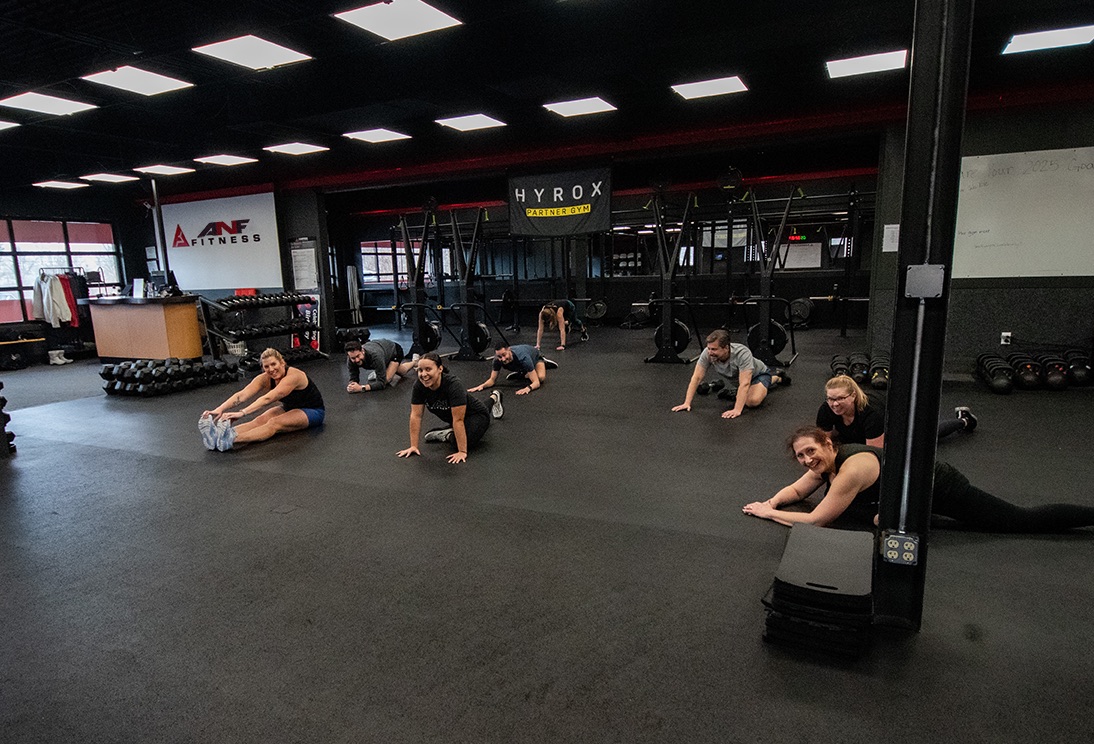
One of the biggest benefits of neuromuscular stretching is increased flexibility. By targeting both the muscle and nervous system, you can safely push past typical limitations.
This is especially important for functional movements like squats, lunges, and overhead presses, all foundational patterns we emphasize in our Strength Training fundamentals content.
Better mobility leads to:
Tight muscles and limited range of motion are common causes of injury. Neuromuscular stretching helps correct imbalances and improves how your body moves under load.
At ANF Fitness, we emphasize longevity and sustainability — a theme we also highlight in our Benefits of Training in a Group Environment, where proper coaching and movement awareness reduce injury risk.
When your muscles can move freely and efficiently, you’re less likely to compensate or overload the wrong areas.
It might sound counterintuitive, but improving flexibility can actually make you stronger. When your joints move through a full range of motion, your muscles can generate more force.
For those working toward hybrid performance, like we discuss in Building a Hybrid Athlete — mobility plays a key role. Strength without mobility limits output, while mobility without strength limits control. Neuromuscular stretching helps bridge that gap.
Neuromuscular stretching can also support recovery by improving blood flow and reducing muscle stiffness after intense workouts.
Whether you're coming off a high-intensity conditioning session or a heavy strength day, incorporating these techniques helps your body reset and prepare for the next session, aligning with our overall training philosophy of consistency and progression.
A common method involves:
This can be done with a partner or independently, and it’s most effective during warm-ups or post-workout recovery sessions.
At ANF Fitness, we go beyond workouts — we focus on total performance. Neuromuscular stretching is a powerful tool to improve mobility, enhance strength, and reduce injury risk.
When combined with structured strength training and conditioning like the methods we cover throughout the ANF Fitness blog, it helps you move better, train harder, and progress faster.
If you're looking to take your performance to the next level, don’t overlook mobility. It could be the missing piece in your training.


